

Ask three vendors what a custom software project costs and you’ll get three numbers, none of them comparable. One quotes the build only. One quotes everything except the part that always overruns. One quotes a range so wide it’s a hedge, not an estimate. This post is our attempt to fix that: a full breakdown of where a custom software budget actually goes, based on the projects we’ve scoped, built, and rescued.

The Number That Matters Is the Program, Not the Project
The first mistake is treating the build as the whole cost. The build is usually less than half of it. A realistic custom software program has five phases, and each one has a different risk profile:
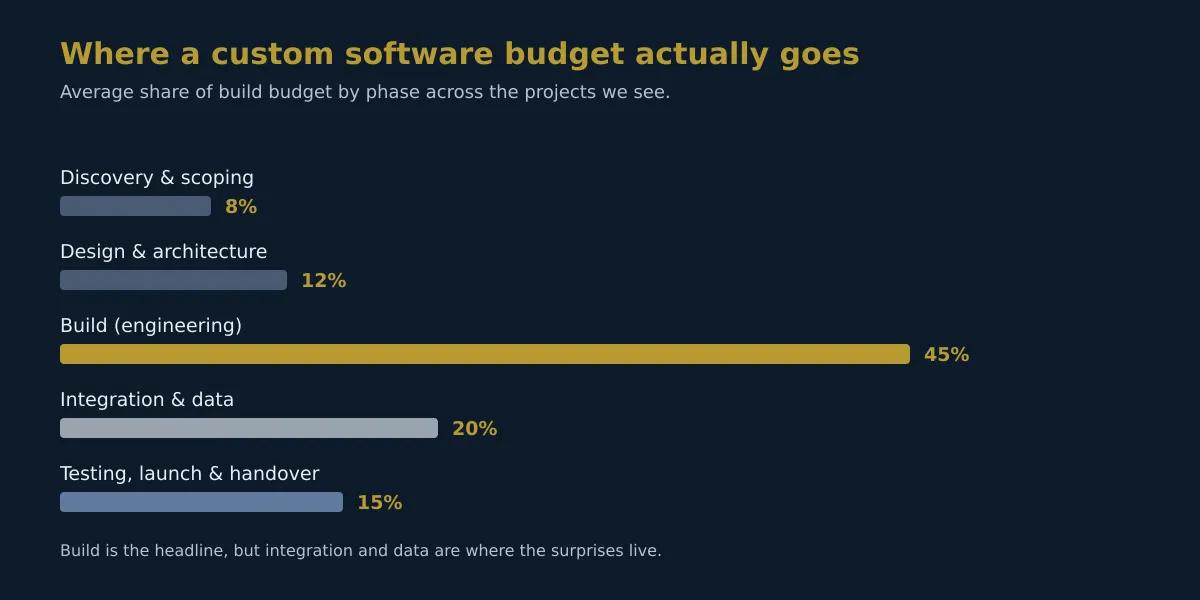
- Discovery (8%): the cheapest phase and the one most likely to be skipped. Skipping it is how the other four phases get more expensive.
- Design & architecture (12%): where security, integration, and data decisions get made. These decisions compound. Getting them wrong here is the single most expensive thing that can happen.
- Build (45%): the part everyone quotes. Notice it’s not the majority.
- Integration & data (20%): connecting to your ERP, your EHR, your payment provider, and cleaning the data they hold. This is the phase that never fits in the original quote, because it’s the phase the original quote usually forgot to ask about.
- Testing, launch & handover (15%): real-device testing, migration, training, documentation, and the week where everything that was true stops being true.
The Five-Year View Changes Everything
Quotes are annual. Costs are multi-year. When we look at the same decision over five years, the “cheap” option and the “expensive” option frequently swap places:
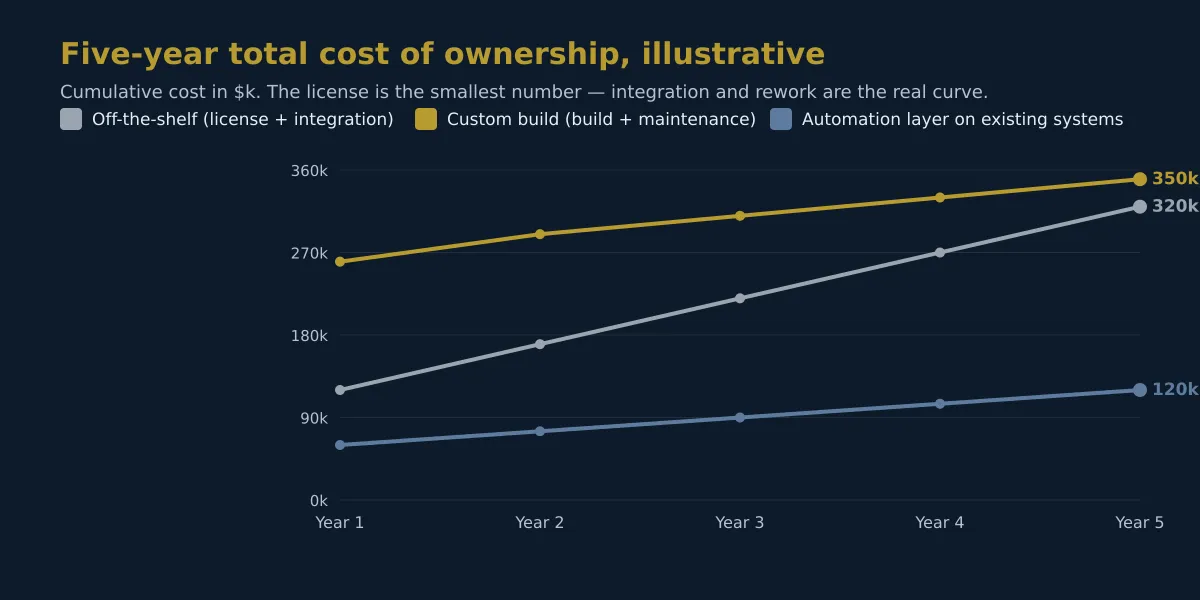
A few patterns show up again and again:
- Off-the-shelf tools start cheap and get expensive: license renewal, implementation, integration fees, and the workarounds your team builds when the tool doesn’t fit. We’ve seen a $30/user/month product cost six figures a year once integration was counted.
- Custom builds are expensive up front and flatten out, as long as the maintenance burden is designed for rather than discovered. A build with no maintenance plan is a liability that pays interest.
- Automation layers, thin workflows that orchestrate the systems you already have, often win on pure numbers because they reuse what exists instead of replacing it. They only work where the existing systems are worth orchestrating, though.
Where the Hidden Costs Live
Every project has a budget line that wasn’t in the proposal. Across the projects we’ve analyzed, the hidden costs consistently add up to roughly a third of the program:
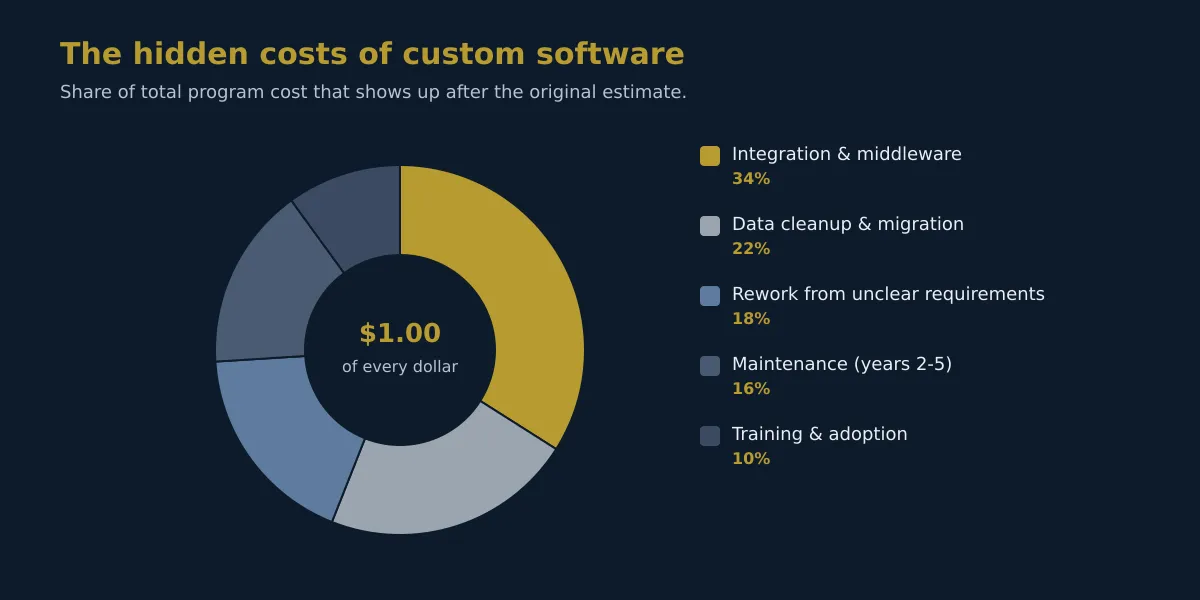
Integration & middleware (34%). The systems you own don’t talk to each other, and the cost of making them talk is almost never in the first estimate. Data cleanup & migration (22%). Moving data from the old system surfaces every duplicate, every conflicting address, every record owned by a person who left in 2019. Rework from unclear requirements (18%). The documented process and the real process are different, and the difference is billed twice. Maintenance (16%). The years after launch, which the annual budget never planned for. Training & adoption (10%). The software that doesn’t get used doesn’t get paid for, and training is what makes it get used.
How We Make the Numbers Honest
There are three practices that stop these surprises, and they’re all cheap compared to the surprises:
1. We quote the program, not the build. The estimate covers discovery through handover, and the integration phase is scoped from the discovery workshop, not discovered during it.
2. We price the data before the features. If your data is a mess, we tell you in the proposal, with a number attached, instead of in month four, with a change order attached.
3. We design maintenance into the budget from day one. Support, monitoring, and a release plan are line items in the original estimate, so year two doesn’t arrive with an invoice nobody expected.
What You Should Ask for in a Quote
When you get a custom software quote, ask four questions. If the answers aren’t specific, the estimate isn’t an estimate:
- What does discovery include, and who sits in it?
- Which of our systems will be integrated, and what’s the data work costed at?
- What happens in month four when we discover the real process differs from the documented one?
- What does year two cost?
We answer all four in every proposal we write. If you’d like a straight answer on what your project would cost, including the parts other vendors forget to quote, book a discovery call.